
Authors: Victor Omondi, Betty Mohe, Joel Onyango and Anne Maina
Introduction
In Kibuyuni Village, Kwale County, Kenya, farming of seaweeds or kelp, has become a common practice attracting women from the coastal region as an invaluable source of livelihood and income. It is reported that women make up 75.2% of farmers while men and youth contribute 17.4% and 7.62%, respectively[1] underscoring the vital role that women play in the seaweed production. The most cultivated species of seaweed in this region include Spinosum (Eucheuma denticulatum) and Cottonii (Kappaphycus alvarezii) given their short production cycle and high yield and ability to withstand temperature variations and infestation by algal parasites (The farming of Seaweeds). These women employ common farming methods such as off-bottom, floating raft, tubular and long line, with each method being dependent on the depth and ocean bed dynamics of the site.
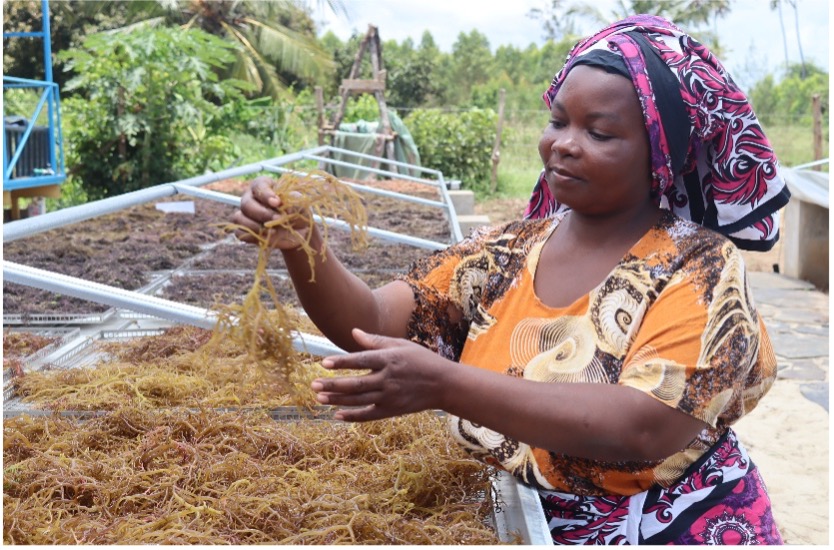
Image 1: A farmer spreading harvested seaweed on raised rack to dry. (Image by Fiona Makayoto).
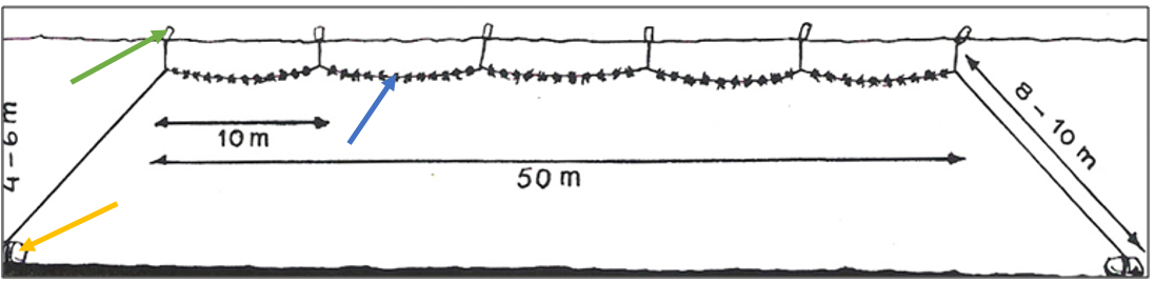
Figure 1: An illustration of long line seaweed farming method. The green arrow points to the floater to keep the line of strands afloat, the blue arrow points to the seaweed strands while the yellow arrow points to the anchor used to keep the line in position. Adopted from The Farming of Seaweeds
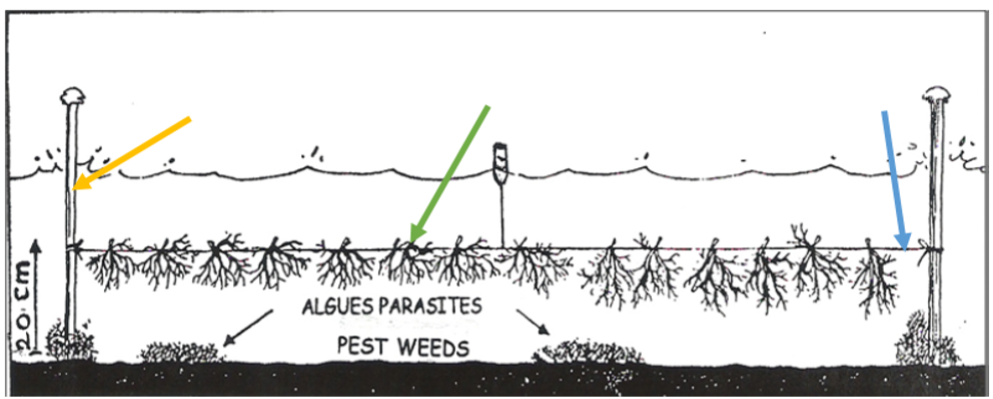
Figure 2: An illustration of an off-bottom seaweed plot. The yellow arrow points to a peg that holds the string in position, the green arrow points to seaweed strands tied to the string shown by the blue arrow.
Seaweed farming has diverse states and uses, making it economically beneficial for farmers. The Kwale women can trade the seaweed fresh, dried, powdered and/or processed into value-added products. Seaweed value added products are of higher value compared to the raw state. Dried Seaweed is currently fetching between KES. 30 and KES.35 per kilogram; while the low-priced seaweed value-added products like bathing soap fetches KES. 100. A cost benefit analysis on the seaweed farming and sales is currently being developed that will detail the comparison in profit margins when the seaweed is sold raw vs when value-added and then sold. This will be reported in our series of blogs on the seaweed value chain.
Seaweed Production Dynamics
 |
| Image 2: A group of women taking part in planting of seaweed in Kibuyuni using the off-bottom method. (Image by Fiona Makayoto) |
During seaweed planting, the cuttings are collected from either the wild mature seaweed or freshly harvested seaweed from previous farms and then replanted on the plots. It is done during low tides when the plots are accessible enabling the women to wade through from the shoreline to the plots offshore. The choice of site for these plots is based on light penetration, navigation routes and inland pollution susceptibility. This indicates the practicality of the farming activity as the farmer can harvest her yield twice per quarter, translating to 8 times per annum with best management practices (BMPs) in place. These include environmental protection and proper seaweed farm siting, seed sourcing, transportation and tying as well as proper seaweed harvesting techniques, post-harvest care/preservation (Better Management Practices (BMPs) for Seaweed Farming in Tanzania). It has been reported that a single cutting of 100 g can reach a weight of 1 kg in 20-40 days (The Farming of Seaweeds). Additionally, unlike terrestrial crops, seaweed farming does not require fertilizer, pesticides, or land, which makes it affordable and environmentally sustainable with simple periodic monitoring. Hence, this farming has low investment costs and high yield with an estimated return of 78%-100% per annum1.
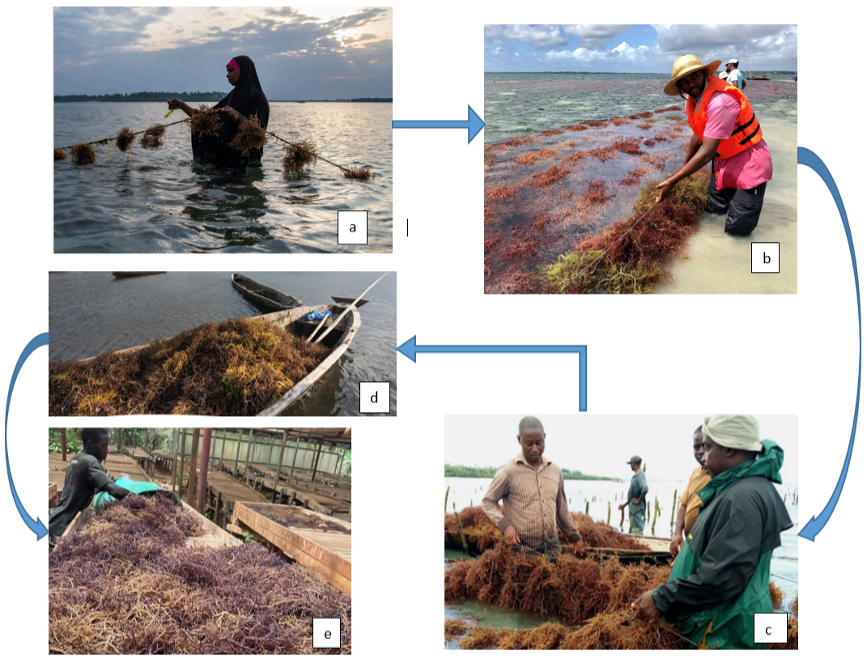
Figure 3: The process of seaweed farming, from planting to drying. (a) Seaweed planting in progress, (b) an already planted Seaweed plot, (c) harvesting of Seaweed, (d) transportation of Seaweed by boat to the beach, (e) Seaweed drying on raised racks. The whole process takes 45 to 50 days (Images by Roshni Lodhia, Sebastian Jan and Victor Omondi).
Products and by-products of Seaweed
 |
|
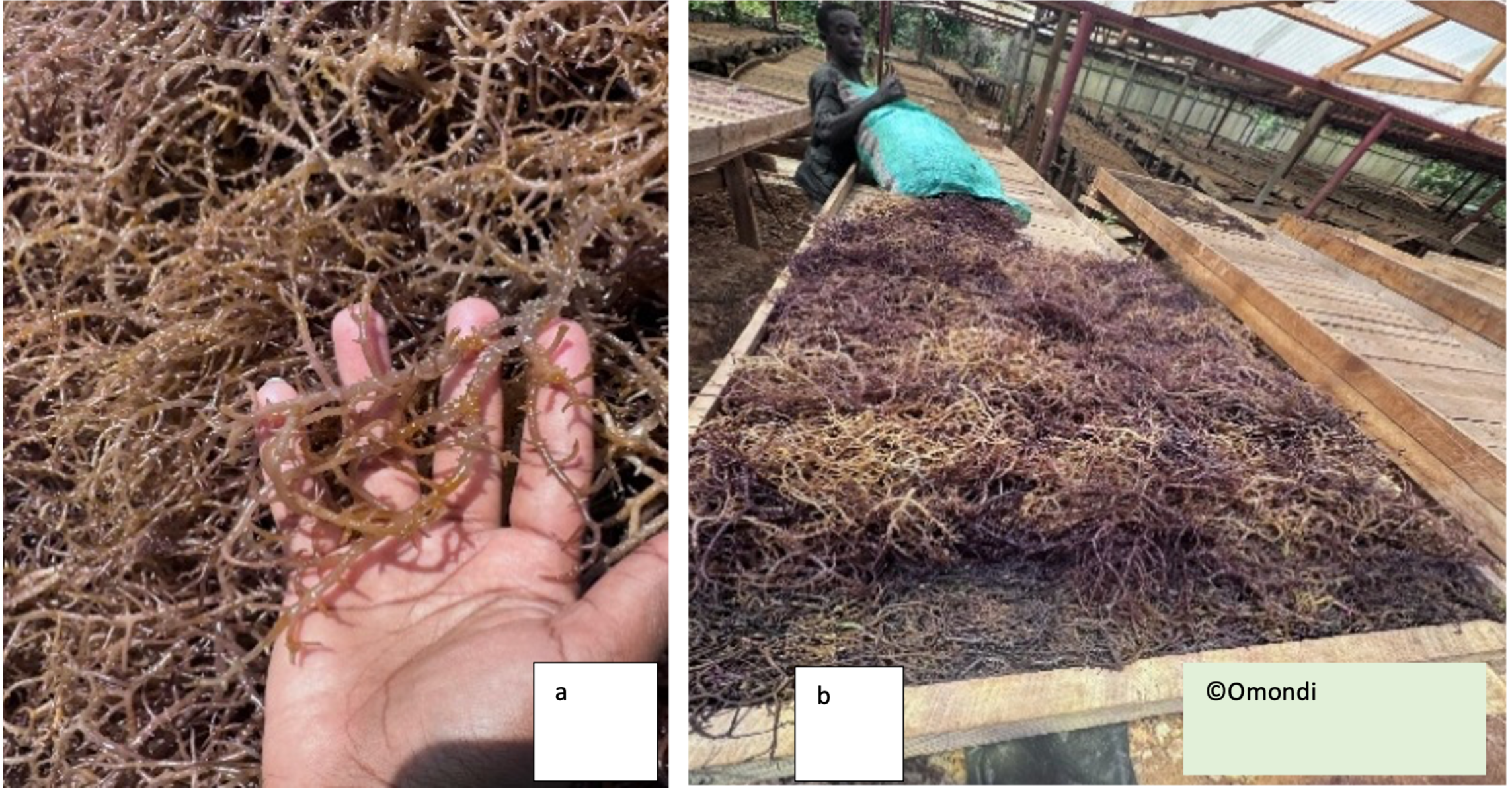
Figure 4: (a) Freshly harvested seaweed yet to be sorted and washed, (b) seaweed being spread on racks under a shade to dry (Images by Victor Omondi). |
Seaweed products and by-products are used in different industries to process a diverse range of products used by animals and human beings. These industries include food and beverage, pharmaceuticals, science, cosmetics, fertilizer production and animal feed formulation industries (Other Uses of Seaweed).
Kibuyuni Seaweed Farmers (Kisefa) in Kibuyuni beach conduct value addition activities to the harvested seaweed. They process seaweed into products such as body lotion, hair shampoo, shower gels, bar soaps, and hair food (Figure 2). In their formulation, they use powdered seaweed and combine it with natural oils like coconut oil and olive oil. These seaweed value added products are then sold at a higher price given their dermatological benefits.
Carrageenan extracted from red seaweed such as Spinosum and Cottonii is used as a thickening agent in puddings, chocolate milk, chewing gum, jams and jellies (The Farming of Seaweed). Algin or alginates which are extracted from brown seaweed and agar from red seaweed are widely used in bakery products, dairy products, salad dressings, and creams. When dried, it can be ground and processed and made into seaweed extract which is then diluted and used as fertilizer in farms providing important nutrients such as potassium, nitrogen and phosphorus.
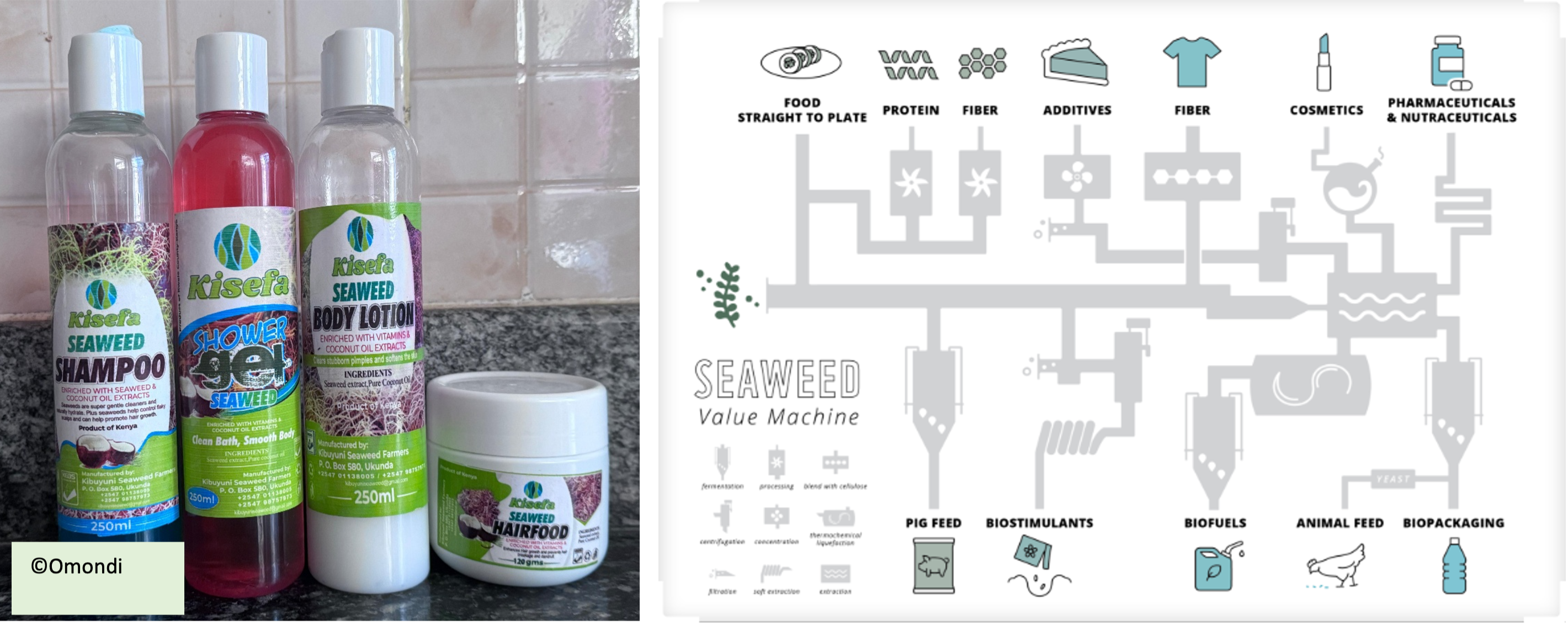
Figure 5: Some of the varieties of products that can be processed from seaweed to benefit humans and animals, underscoring the importance of seaweed as a raw material. These include seaweed shampoo, shower gel, body lotion and hair food produced by Kisefa in Kibuyuni, Kwale County as in the picture on the left (Image by Victor Omondi).
Challenges and Opportunities
Challenges faced in seaweed farming include the lack of infrastructure such as stable electricity, transportation routes, processing and storage facilities, climate change including rising sea levels, rising temperatures, ocean acidification and storm surges which have significant impacts on the growth and quality of seaweed crops and pose potential threats such as crop failures (The Farming of Seaweeds). In addition, invasive species pose competitive threats to the native ones invading and dominating the habitats for resources and introducing new diseases and pests. Kisefa also expressed the challenge with commercializing their products in a way that would command premium prices to enhance their profitability. The other challenge reported is the drifting of the floating rafts during high tides, storms and cyclones leading to losses. Grazing of Seaweed by herbivorous fish, sea urchins and marine turtles has been reported as the cause of biggest losses in seaweed plots, especially the pre-mature seaweeds.
Despite these challenges, there is great potential that can be leveraged from this industry in a bid to address the multidimensional poverty and gender disparity that is characteristic of the region. Capacity building and financial support can enable this community to venture and expand their activities – sustainably – hence boosting their livelihoods and economic status. Promoting seaweed farming can help eliminate the barriers and challenges faced by women in accessing the ocean to exploit the resources. Income earned from this practice has empowered the women in the village to take part in the family decision making process as well as contribute to the livelihood and wellbeing of their families.
Promotion of seaweed farming and value addition, targeting coastal women, is a Blue Empowerment strategy that should be implemented to enhance gender equality and social inclusion for sustainable development. Some of the long-term gains already observed in Kibuyuni village as a result of seaweed farming is the development of road networks and electrical power supply that has awakened the traditionally sleepy village. In conclusion, seaweed farming has a greater potential of impacting positively on the wellbeing of coastal communities with BMPs put in place to mitigate the potential negative impacts that may arise.
[1] David O. Mirera, Alex Kimathi, Morine M. Ngarari, Esther W. Magondu, Miriam Wainaina, Agwata Ototo, Societal and environmental impacts of seaweed farming in relation to rural development: The case of Kibuyuni village, south coast, Kenya, Ocean & Coastal Management, Volume 194, 2020, 105253, ISSN 0964 5691, https://doi.org/10.1016/j.ocecoaman.2020.105253.