By Joel Onyango and Christabel Mukubwa
Along Kenya’s coastal shorelines, something extraordinary has been unfolding. It’s not a tech startup or a global investment boom. Its seaweed, yes, that slippery green brown crop that once held little value beyond the tide.
For decades, seaweed farming has been a source of livelihood for many, particularly women, in coastal communities. However, with rising demand in global markets, and growing advocacy for inclusion, seaweed is emerging as a powerful driver for transformation in the blue economy.
Since its introduction in the early 2000s by Kenya Marine and Fisheries Research Institute (KMFRI), seaweed farming, quickly took root in areas like Kibuyuni and Gazi. The premise was simple: empower coastal communities to cultivate seaweed and sell it to global buyers. While some gains were made, productivity plateaued. Yet over time seaweed has continued to show high potential.
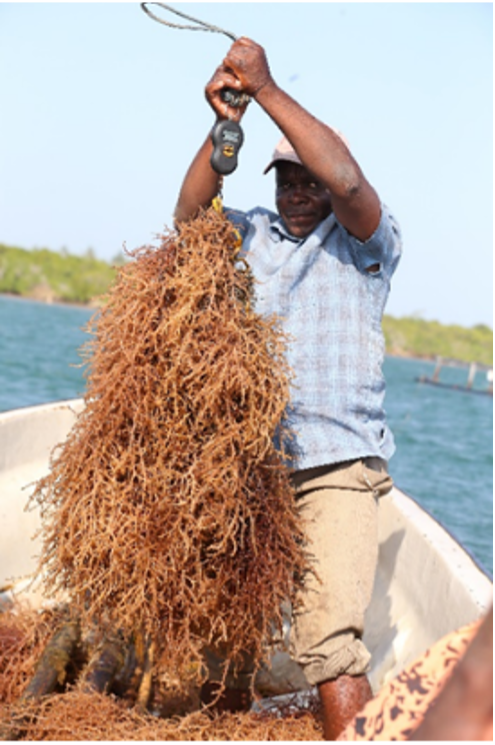
Image 1: Bw. Tei Usi, Bahari CBO, holding a bundle of freshly harvested seaweed
What makes Farming Seaweed Unique?
When people first hear about seaweed farming, especially as a growing Blue Economy solution, one question often bubbles up, could this activity harm the ocean? Which is an honest concern, especially in a world where even well intentioned innovations have left visible scars to fragile marine ecosystem. The truth is, when poorly managed, seaweed can disrupt delicate underwater habitats like seagrass beds and coral reefs, which have been the guardians of our coastlines for ages.
Coral reefs shelter nearly a quarter of all marine life while seagrass anchors the seabed and provide safe nurseries for fish, turtles, and dugongs. These two form a living shield against waves, protecting shorelines from erosion, and they also absorb CO2 faster, hence when they flourish, the ocean breathes easier.
Seaweed compliments all this, beneath the waves, its long, ribbon like fronds pull CO2 from the water as it grows easing ocean acidification and safeguarding marine habitats for generations to come. Seaweed farms become underwater neighborhoods providing shelter for fish, crabs and other marine species, hence boosting biodiversity in coastal waters.
They absorb excess nutrients like nitrogen and phosphorus, which helps to control harmful algae blooms. Dense seaweed beds help in reducing shoreline erosion and protecting fragile ecosystem by acting like green buffer softening the impact before waves hit the coast, making it a powerful tool
Another added advantage is that unlike other crops it does not need fertilizers, pesticides or soil. It grows using nutrients already in seawater and sunlight. The farmers pick shallow, calm waters nearshore lagoons with sandy bottoms and minimal waves, it is mandatory that the area should be free from pollution.
Seaweed takes 6-8 weeks or 45 days to mature, with every now and then the farmer checking out for pests, diseases or damage from storms. Sustainably grown, seaweed is not just a crop; it’s a quiet architect, weaving health back into the entire coastal ecosystem.
Challenges beneath the Surface
Despite its promise, seaweed farming in Kenya still struggles with low yields, limited financing, poor infrastructure and fragmented policy support. But these are not just technical challenges they’re deeply social. Much of seaweed’s productivity challenge are linked to inclusion or the lack of it. Women, youth, and indigenous knowledge holders are often excluded from decision-making processes, hindering this project’s ability to upscale quickly. Most seaweed is sold raw and dried, due to little local processors.
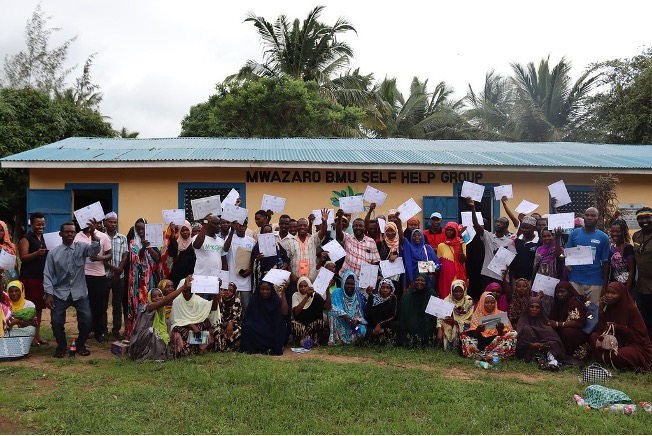
Image 2: Training of Community Groups on Business Models - Kwale County
Drying seaweed, especially in rainy seasons, can result in significantly higher losses due to lack of proper drying equipment. While diseases like “ice-ice” (caused by salinity and temperature stress) have been reported in places like Gazi and Vanga in Kwale County, adding more salt to the wound, most farmers lack the training or tools to manage them. To make matters worse, many rely on recycled cuttings from previous harvests, which leads to low productivity and the spread of diseases.
Without targeted training, better farming inputs, and disease management strategies, these issues will continue to undermine the resilience and profitability of seaweed farming along our coast.
Scaling Solutions: BEF and Beyond
To overcome these bottlenecks, Kenya must reimagine development, not deliver it from the top down, but co-create it with communities, driven by local priorities, knowledge, and innovation. The Blue Empowerment Fund (BEF) through the African Centre for Technology Studies (ACTS) in partnership with Kenya Industrial Research and Development Institute (KIRD), Kenya Marine & Fisheries Research Institute (KMFRI), Kenyatta University KU, Bahari CBO Network, SeaMoss Corporation and Kenya’s coastal communities is a bold example of how that could work.
The BEF is a community-driven financing mechanism and coordination tool designed to support SACCOs established under the Blue Empowerment project. Its focus in on strengthening women-led sustainable coastal enterprises especially seaweed farming and related Blue Economy activities.
Imagine a women’s cooperative gaining access to solar dryers, or a youth led startup scaling up seaweed powder production for local markets. These stories are already unfolding just waiting for broader support to tip into transformation.
Figure 3: The Blue Empowerment Fund (BEF)
It will address key challenges by;
- Providing accessible financing - Many women and youth in coastal communities lack access to credit. The BEF will offer tailored fund from Acts and partners to help them start, grow, and improve their seaweed related enterprises.
- Boosting value addition - Instead of selling seaweed raw, the BEF will support post-harvest innovations such as solar dryers, eco-friendly packaging, skincare production, and food-grade seaweed powders.
- Strengthening skills & knowledge - Through partnership with ACTS and KMFRI, the BEF will integrate training in climate-smart aquaculture, quality control and business management.
- Building community financial resilience – The BEF will integrate the SACCOs established through the Blue Empowerment project, ensuring that profits circulate locally and communities can reinvest in their own development.
The goal of the BEF is to create a shared, community-owned funding system that reinforces and sustains operations, speeds up the growth of inclusive businesses, attracts diverse sources of investment, and builds up community resources.
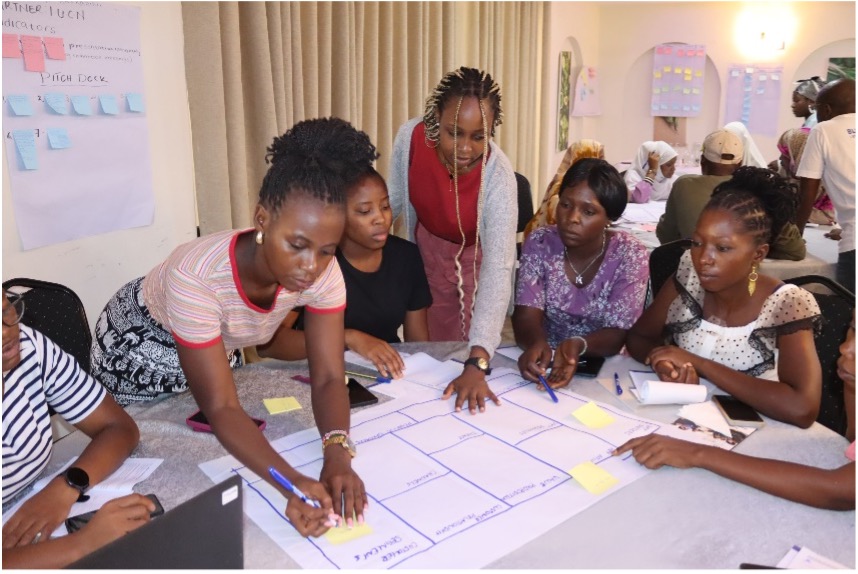
Figure 4: BE Project training on women-led SACCOs in Mombasa, with participants from Kwale and Kilifi
With the BEF in place seaweed farming doesn’t have to be unappealing to youths. Reimagined through the lens of innovation, it is a Launchpad for; digital tools for farm monitoring, mobile applications for traceability and payments, climate adaptation modelling, and value chain logistics. What’s needed is intentional investment in capacity building, mentorship, and co-creation with youths. By tapping into their ideas, energy, and digital fluency, we unlock new ways of thinking and operating. Therefore, seaweed becomes more than a plant it becomes a platform for entrepreneurial expression and climate innovation.
In Kibuyuni for instance, women’s groups are now making handmade seaweed soap, lotion, and shampoo. In Funzi, youths are experimenting with seaweed-based packaging, gels, and soaps.
These aren’t pipe dreams they’re proof of concept. But they face real barriers: limited credit, poor post-harvest infrastructure, and minimal policy support.
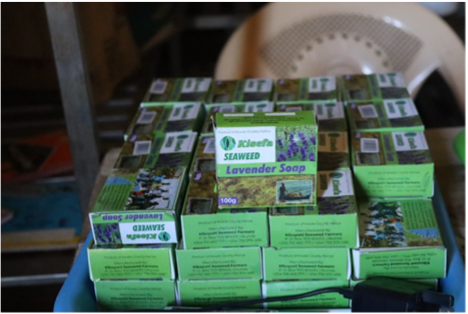
Figure 5: Soap made from seaweed, crafted by the community in Kwale
That’s where the Blue Empowerment Fund (BEF) comes in reimagining what’s possible along Kenya’s coast. Picture a women’s cooperative in Kilifi gaining access to solar dryers, or a youth-led startup in Kwale scaling seaweed powder production for local markets. These stories are already taking shape; they only need broader support to tip into true transformation. With the right partnerships and financing models like the BEF, today’s small wins across coastal communities can grow into lasting impact.
Seaweed Farming as a Mirror to Bigger Development Questions
Seaweed farming is more than a coastal livelihood it’s a reflection of the broader development tensions facing our coast.
- Climate volatility at the doorstep. Unpredictable weather, rising sea levels, saline intrusion, and erratic rainfall are already disrupting farms and threatening the long-term viability of coastal livelihoods.
- The seed stock trap. Most farmers rely on reused cuttings from past harvests, many already weakened by disease and pests. Without access to certified, fast growing strains like Kappaphycus alvarezii, yields remain stubbornly low, locking farmers into a cycle of underproduction.
- Post-harvest losses on the drying racks. Without proper solar dryers or elevated racks, farmers face huge substantial losses during the rainy season turning weeks of labor into waste.
- Fragile infrastructure. Makeshift ropes and wooden pegs can’t withstand strong tides. Durable solutions like floating rafts or deep water systems exist, but remain financially and technically out of reach for many.
- Innovation without connection. Research institutions continue to develop improved techniques and yet these rarely reach the farmers who need them most. When knowledge stays in the lab, productivity stays stuck in the shallows.
- Markets that move against the tide. With unpredictable prices and no guaranteed buyers, farmers risk financial losses every harvest, making investment in better systems a gamble.
- Missing voices at the table. Women and youth, the backbone of many farms are too often excluded from decision-making. Without their perspectives shaping programs, interventions miss the mark.
Seaweed farming, then, is not just about ropes in the water it’s a living snapshot of our coast’s fight for resilience, equity, and innovation. But it’s also a laboratory for solutions. When development centres local voices, seaweed becomes more than a livelihood; it transforms into a platform for inclusion, dignity, and climate resilience.
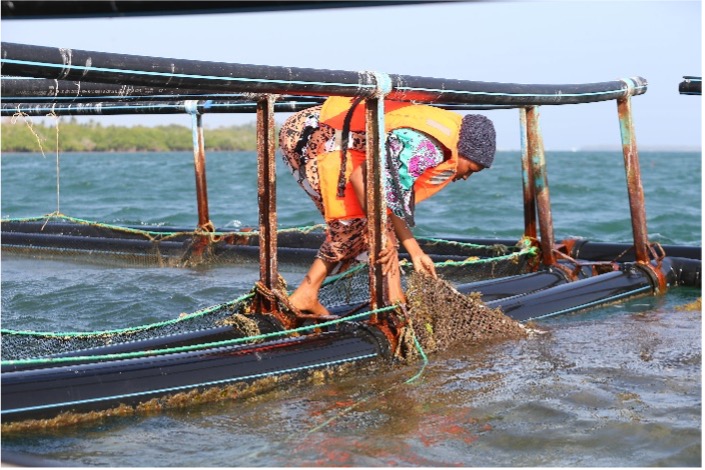
Figure 6: BE Field Officer, Mwandazi Mwarabu demonstrates seaweed farming and harvesting at Kijiweni, Kwale County
The time to act is now. With the right partnerships and financing models like the BEF, small wins can grow into waves of lasting change. The real question is: will we let these opportunities drift out with the tide or will we anchor them to a future our coast deserves?
In conclusion
Seaweed farming is more than a coastal livelihood it’s a living blueprint for climate resilience, community empowerment, and inclusive innovation. The Blue Empowerment Fund (BEF) is envisioned as a model of what’s possible when financing meets local knowledge and youth creativity. If we invest now in better infrastructure, fair markets, and co-created solutions, small seaweed farms can grow into thriving enterprises that nourish people, protect oceans, and power the Blue Economy for generations to come. The tide is rising; the moment to act is now.