By Ursulla Wandili, Victor Omondi and Benard Simiyu
Introduction
Kenya’s coastal region is endowed with rich coastal and marine biodiversity and ocean resources, offering significant potential for economic growth through the Blue Economy. This sector currently contributes approximately KES 178.8 billion to Kenya’s economy annually according to the Kenya News Agency, 2024, representing about 2.5% of the country’s gross domestic product (GDP) as reported by the Kenya Institute for Public Policy Research and Analysis, 2025.
Women in coastal communities play vital roles in the blue economy, particularly in the fish value chain, for instance, post-harvest processing and trade. Despite their contributions, they face persistent challenges such as limited access to financial resources, deeply rooted gender and cultural norms, and the burden of unpaid care work. These barriers leave them disproportionately vulnerable to economic hardship, thereby weakening the resilience of the entire community. Climate change has further exacerbated these challenges through the rising sea levels, ocean warming, and unpredictable weather patterns, which are increasing environmental degradation, disrupting ecosystems, and threatening marine biodiversity. These impacts not only interfere with fishing activities but also undermine food security and the stability of local economies.
Climate Resilience through Sustainable Blue Economy Practices
The adoption of climate-smart aquaculture practices, such as Integrated Multi-Trophic Aquaculture (IMTA), offers an innovative, nature-based solution to climate change while supporting sustainable livelihoods. The Blue Empowerment project, led by the African Centre for Technology Studies (ACTS) in collaboration with other consortium partners including Kenyatta University (KU), Kenya Industrial Research Development Institute (KIRDI), Kenya Marine and Fisheries Research Institute (KEMFRI), Bahari CBO and Sea Moss Corporation, is currently piloting this approach in Kwale County. The IMTA system integrates seaweed (Eucheuma denticulatum) and rabbitfish (Siganus sutor) in a mutually beneficial farming model. Seaweed absorbs excess nutrients from the water, enhancing water quality and sequestering carbon from the atmosphere to help mitigate climate change. At the same time, rabbitfish farming provides a steady, diversified income, reducing dependence on declining and unpredictable wild fish stocks. The IMTA system has already contributed to increased financial independence among fisherwomen, strengthened their resilience to climate-related shocks, and promoted more inclusive participation in marine-based livelihoods. By supporting marine biodiversity and easing pressure on overexploited resources, this integrated approach serves as a powerful strategy for climate adaptation by ensuring that coastal communities, especially women, have access to reliable and sustainable sources of livelihood.
Empowerment of women through Sustainable Aquaculture
In addition to its environmental advantages, sustainable aquaculture is creating new opportunities for women to break through traditional barriers in the fisheries sector. Historically, marine resource activities, particularly deep-sea fishing that have been dominated by men, often leaving women marginalized. However, the rise of accessible aquaculture ventures like cage fish farming and seaweed cultivation is enabling women to take a more active role in managing marine resources and contributing to economic decision-making.
Leadership and Decision-Making: Women are increasingly taking leadership roles in aquaculture running their own businesses (e.g. Mama Karanga), joining women led savings and credit cooperative societies (SACCOs) recently established in Kwale and Kilifi counties, vying for leadership positions such as in Beach Management Units (BMUs), which gives them a platform to contribute to decisions made on fisheries activities. The interesting impact of this initiative is the level of confidence it has instilled in women in this community to take leadership roles and freely air out their views and opinions in a space that has been traditionally dominated by male chauvinism. This shift is crucial for challenging traditional gender norms and amplifying women’s voices in the blue economy sector.
Capacity-building programs: The training on SACCO leadership, value addition and new aquaculture technologies such as IMTA has enabled women to become more efficient and innovative. These initiatives contribute to both improved practices and higher productivity, empowering women to be catalysts for environmentally sound solutions.
Economic Empowerment: Seaweed farming and aquaculture generates significant income, particularly for women in Kwale and Kilifi counties. Women participating in the fish value chain especially processing and seaweed farming have gained the ability to make personal and household expenditure decisions, establishing a foundation for long-term empowerment.
Promoting Gender Equality: The Blue Empowerment initiative is promoting sustainable aquaculture initiatives that prioritize gender parity help dismantle systemic discrimination, foster inclusive policies, and offer equal access to resources and credit for women. This unlocks broader participation in local, national, and international markets.
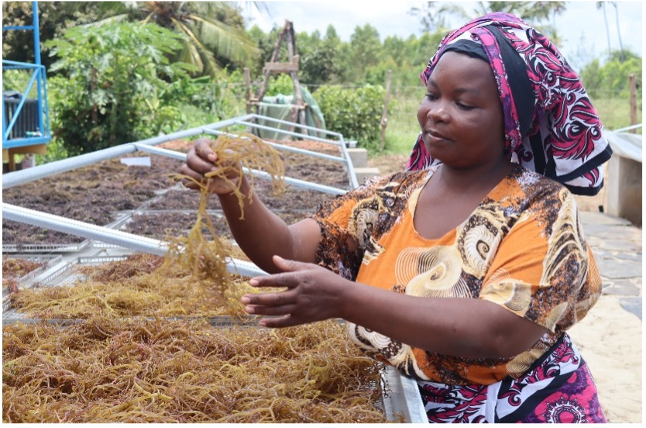
Figure 1: A woman in Kibuyuni spreading seaweed on raised racks to dry.(Image by Fiona Makayoto)
Policy, Partnerships, and Future Prospects
Policy
Sustaining and scaling innovative solutions like IMTA requires more than local adoption; it demands an enabling policy environment that prioritizes gender equality, climate resilience, and sustainable resource use. Policies are critical because they provide a foundation for resource allocation, institutional support, and long-term planning. Without supportive policies, even the most promising grassroots innovations can struggle to grow or be sustained. The following are most transformative policies for sustainable aquaculture development in Kenya:
Marine Spatial Planning (MSP) 2024: The plan enables a more organized and equitable use of coastal and marine spaces. By designating zones for specific uses such as aquaculture, conservation, and community fishing, MSP can reduce conflicts and ensure that marginalized groups, including women, are not pushed out of decision-making or access to resources.
National Oceans and Fisheries Policy (2020): The policy reinforces inclusive approach by promoting sustainable fisheries and aquaculture practices while actively supporting the participation of women and youth in marine-based livelihoods. By recognizing the potential of innovations like IMTA, this policy paves the way for integrating such practices into national development priorities.
The National Aquaculture Policy 2025
This policy focuses on increasing aquaculture growth envisioning a sustainable, thriving and economically vibrant aquaculture sub-sector. In the policy, common challenges such as aquaculture production and productivity, marketing and trade, extension services and technology adoption, aquaculture research among others, are addressed. The policy identifies key stakeholders that brings together all the government ministries and respective state departments as well as county governments and national government parastatals outlining the roles for each entity.
The policy provides a strategic framework to promote sustainable and inclusive aquaculture in Kenya. It emphasizes innovation, technology adoption, and improved extension services to boost productivity and climate resilience. Strengthening research–practice linkages and value addition are also key priorities. Gender and youth inclusion is central, with a focus on equitable access to resources, finance, and training. These provisions create an enabling environment for modern aquaculture. They support community-led models and empower women in coastal economies. The policy sets the stage for transformative growth in the sector through promotion and adoption of novel technologies such as cage culture, aquaponics, innovation in mariculture and other emerging issues.
Partnership
While policy frameworks lay the groundwork, real change comes from strong partnerships. Collaboration between government, civil society, researchers, and the private sector is essential to translating policy into action. Institutions like the African Centre for Technology Studies (ACTS) are leading this charge, facilitating research, policy dialogue, and implementation to ensure community-led innovations like IMTA are recognized, supported, and scaled up.
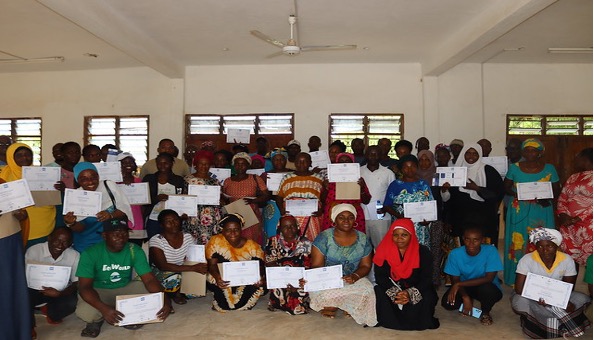
Figure 2: Group photo for Kilifi South business training workshop
Future prospects in the blue economy sector in Kenya proves to be full of potential as the sector resources are still under-utilized. Incorporating strategic investment and adoption of new and emerging technologies, sustainable fisheries management, and aquaculture expansion can significantly boost food and nutrition security, income generation and employment opportunities to the local communities. Aquaculture is steadily gaining traction as a commercially viable alternative to capture fisheries especially in regions around Lake Victoria with initiatives such as Aquaculture Business Development Programme (ABDP), funded by the government of Kenya and International Funds for Agricultural Development (IFAD) helping farmers access markets and financing. This should be replicated in the Kenyan Coast to tap on the low hanging opportunities and prospects in the region.
Conclusion: A call for inclusive, Climate-Resilient coastal Development
The Success of women-led aquaculture in Kilifi and Kwale counties is a clear testament to what is possible when gender equity meets climate innovation. Through sustainable solutions like IMTA, women are not only improving household incomes and food security but also leading a shift in social norms and community resilience.
Policy makers must prioritize investment in gender responsive aquaculture, expand access to training, finance and markets, and embed women's leadership at the heart of blue economy strategies. By scaling up these efforts, Kenya can set a global precedent for how inclusive, climate –smart development transforms coastal communities.